

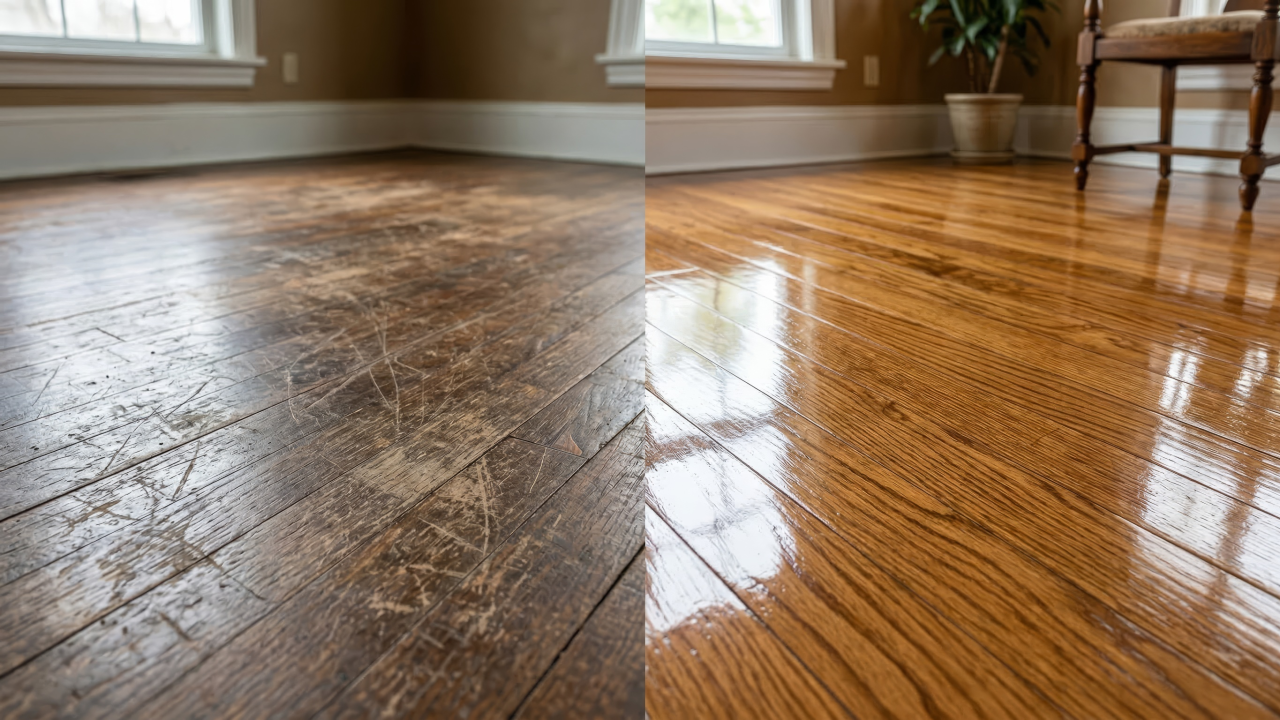
Selecting the perfect hardwood floor involves more than just picking a wood species like oak, maple, or walnut. The protective finish you apply—specifically its sheen level—dramatically alters how the wood looks, reflects natural light, and fits into your daily routine. Sheen refers to the percentage of light that reflects off the floor’s surface. Choosing between matte, satin, and high gloss requires balancing your personal design aesthetic against practical considerations like foot traffic, dust management, and pet activity.
High Gloss: Maximum Shine and Architectural Drama
High-gloss finishes reflect roughly 70% or more of the light that hits them. This creates a brilliant, mirror-like surface that accentuates natural wood grain patterns and adds an immediate sense of formal elegance to a space.
Historically favored in traditional estates and upscale ballrooms, gloss finishes excel at bouncing light around darker rooms. However, high gloss comes with notable upkeep demands. Because the surface acts like a smooth mirror, every stray dust particle, smudge, pet hair, and surface scratch stands out under direct light. High-gloss hardwood demands frequent dust mopping and is generally best suited for low-traffic areas, formal dining rooms, or homes without large pets and active toddlers.
Satin Finish: The Balanced Household Standard
If high gloss sits at one extreme, satin represents the soft middle ground. Reflecting approximately 35% to 45% of light, satin finishes deliver a warm, subtle sheen that highlights wood character without creating harsh glare.
It is easy to see why satin remains the most popular finish for residential hardwood installations:
Versatile Aesthetics: It fits seamlessly into modern, traditional, and transitional interior styles.
Forgiving Surface: The moderate light reflection conceals minor daily wear, light scratches, and footprints far better than high gloss.
Low Maintenance: Rooms maintain a clean, polished appearance between routine sweepings without showing subtle surface dust.
Satin provides the perfect compromise for homeowners who want the refined look of finished hardwood without committing to daily polishing.
Matte & Low-Sheen: Modern, Casual, and Concealing
Matte and ultra-matte finishes reflect minimal light (usually around 10% to 25%). This creates an untreated, natural appearance that brings out the raw, organic beauty of the timber.
Matte finishes have gained immense popularity alongside Scandinavian, modern farmhouse, and contemporary rustic design trends. Because matte surfaces do not reflect light directly, they excel at disguising micro-scratches, scuffs, and dust. If you have active dogs running down hallways or children playing on the floor, a low-sheen finish keeps your hardwood looking newer for much longer. The primary trade-off is that matte finishes can sometimes appear flat in rooms with low natural light, so proper room lighting is essential.
Factors to Consider Before Making Your Choice
When deciding on the right finish sheen, analyze the lighting and lifestyle in each specific room. Large windows letting in harsh direct sunlight will magnify imperfections on glossier surfaces, making matte or satin a smarter choice. Conversely, dimly lit hallways benefit from the extra light bounce offered by a satin sheen.
Think honestly about your lifestyle as well. Busy households with high foot traffic usually find matte and satin finishes far easier to maintain over time, whereas quieter, formal spaces can accommodate the striking reflection of higher sheen levels.
Selecting the ideal sheen brings out the true personality of your hardwood while ensuring your floors stay practical for daily life.


